


Inside Hong Kong’s Haunted Property Market: How Suicide and Unnatural Death Destroy Real Estate Values — and What Buyers Can Do About It
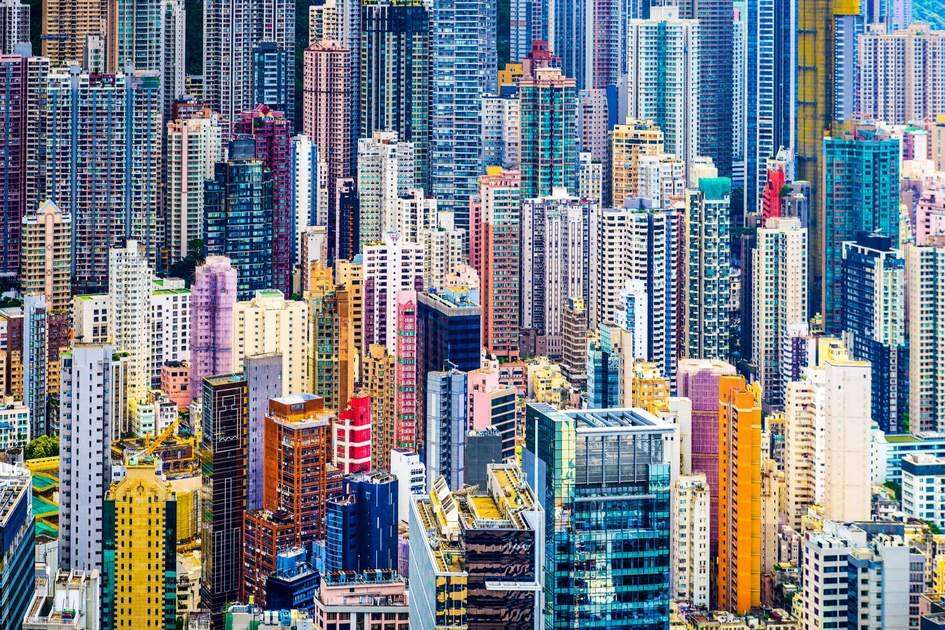
In Hong Kong’s fiercely competitive real estate market — where space is at a premium and prices routinely break global records — one factor can freeze a sale faster than any economic downturn: a ghost.
The phenomenon of the ‘haunted property’, known locally as hongza (凶宅) or ‘calamity house’, is a unique intersection of ancient superstition, modern real estate dynamics, and legal ambiguity. When an unnatural death such as a suicide or murder occurs within an apartment, the financial fallout is swift and severe. The property’s commercial value plummets, banks often refuse to issue mortgages, and the stigma can spread like a contagion to neighbouring units and even entire floors of the same building.
This article explores the cultural roots of the hongza phenomenon, examines real-world cases where tragedy has erased millions in property value, and offers practical solutions for buyers willing to brave the supernatural for a steep discount.
THE CULTURAL WEIGHT OF UNNATURAL DEATH
To understand why a modern, global financial hub remains so deeply influenced by the supernatural, one must look to traditional Chinese beliefs and the principles of feng shui.
In Chinese culture, death is often viewed as a source of bad luck, particularly when it is sudden, violent, or unnatural. Suicides, murders, and tragic accidents are believed to trap the soul of the deceased in the mortal realm. These restless spirits, filled with grievance or unresolved trauma, generate overwhelming negative energy (sha qi), which disrupts the harmony of the living space. This belief is deeply ingrained in the local psyche.
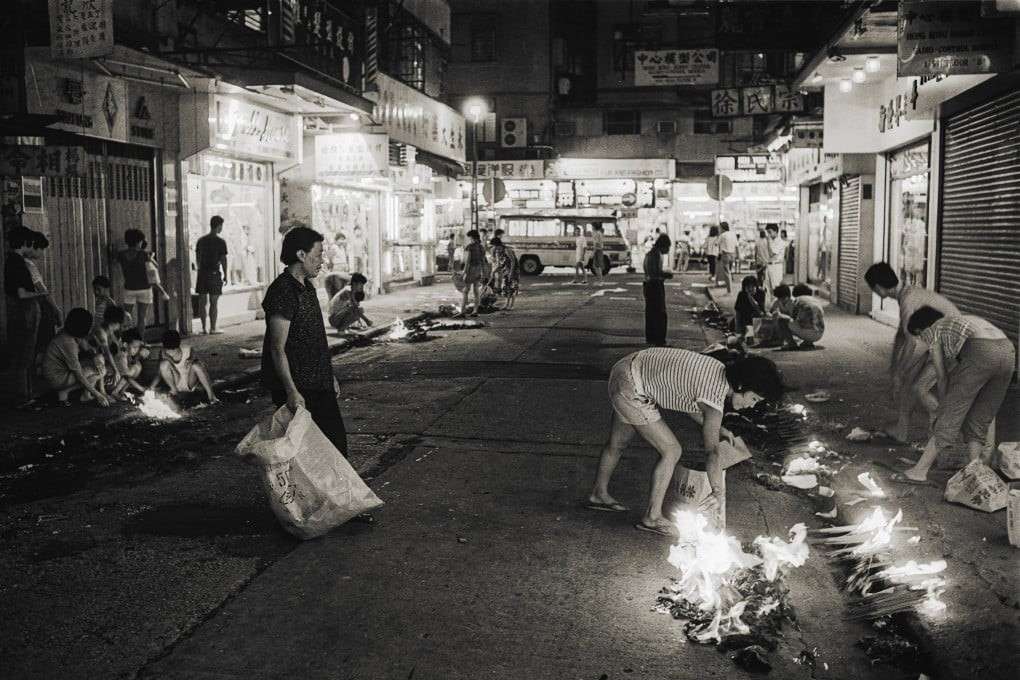
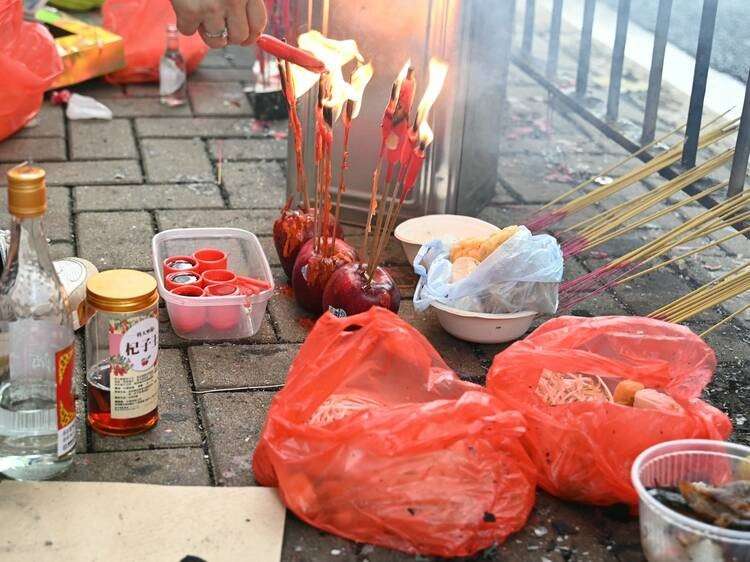
During the Hungry Ghost Festival — celebrated on the 15th day of the seventh lunar month — it is a common sight to see Hongkongers burning paper offerings on the streets to appease wandering spirits. When this spiritual anxiety is confined within the walls of a small apartment, the psychological barrier for potential buyers becomes insurmountable.
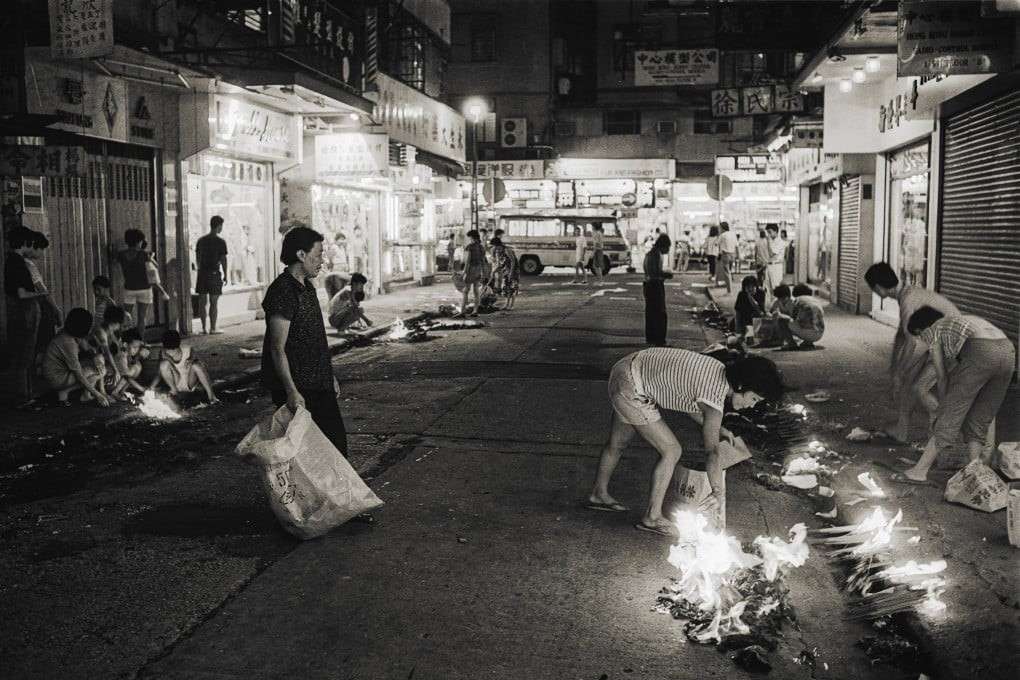
The term hongza itself translates literally to ‘calamity residence.’ Unlike Western concepts of a haunted house, a hongza does not require actual reports of paranormal activity; the mere occurrence of an unnatural death is sufficient to stigmatize the property permanently. The concept is rooted in a cultural history that predates Hong Kong’s existence as a city. During the Cultural Revolution in mainland China, government campaigns deliberately destigmatized death to reduce superstition. Hong Kong, however, experienced no such campaigns. Its relative cultural isolation preserved a deep-seated fear of death that continues to shape the property market today.
Feng shui practitioners — of whom there are thousands actively working in Hong Kong — play a central role in reinforcing these beliefs. Approximately 40% of property developers in the city still consult feng shui masters when designing new buildings. The same practitioners are called upon to assess whether a property has been contaminated by negative energy following an unnatural death.
THE FINANCIAL CONTAGION: SPILLOVERS AND DISCOUNTS
The financial impact of a hongza classification is staggering. Research published in the peer-reviewed journal Regional Science and Urban Economics (Chang and Li, 2018) found that, on average, units in which an unnatural death occurred experience a 25% drop in value following the death. A separate study by Bhattacharya, Huang, and Nielsen (2021), published in the Review of Finance, confirmed that units where someone committed suicide sell for approximately 20% less than comparable properties, while murder sites attract discounts of up to 34%.
However, the most insidious aspect of the hongza phenomenon is its spillover effect. The negative energy — and the corresponding financial penalty — does not respect property lines.
Impact of Unnatural Death on Property Values
| Scope of Impact | Average Price Decline |
| Unit where murder occurred | ~34% decline |
| Unit where suicide occurred | ~20–25% decline |
| Unit where accident occurred | ~12% decline |
| Neighbouring units on same floor | ~4.5–9.7% decline |
| Other floors in same building | ~2.6% decline |
Sources: Chang & Li (2018), Regional Science and Urban Economics; Bhattacharya et al. (2021), Review of Finance; SCMP (2022).
Case Study: The Balcony Tragedy
One of the most striking illustrations of the collateral damage caused by unnatural deaths in high-density housing is the case of a falling death. In Hong Kong, it is not uncommon for a tragic event on a higher floor to devastate the value of a property far below.
When an individual jumps from a high-rise apartment and tragically lands on the balcony or terrace of a lower-floor unit, both properties are instantly stigmatized. The higher unit is tainted as the site of the suicide, while the lower unit becomes the site of the death — even though the owner of the lower flat had absolutely no involvement in the incident whatsoever.
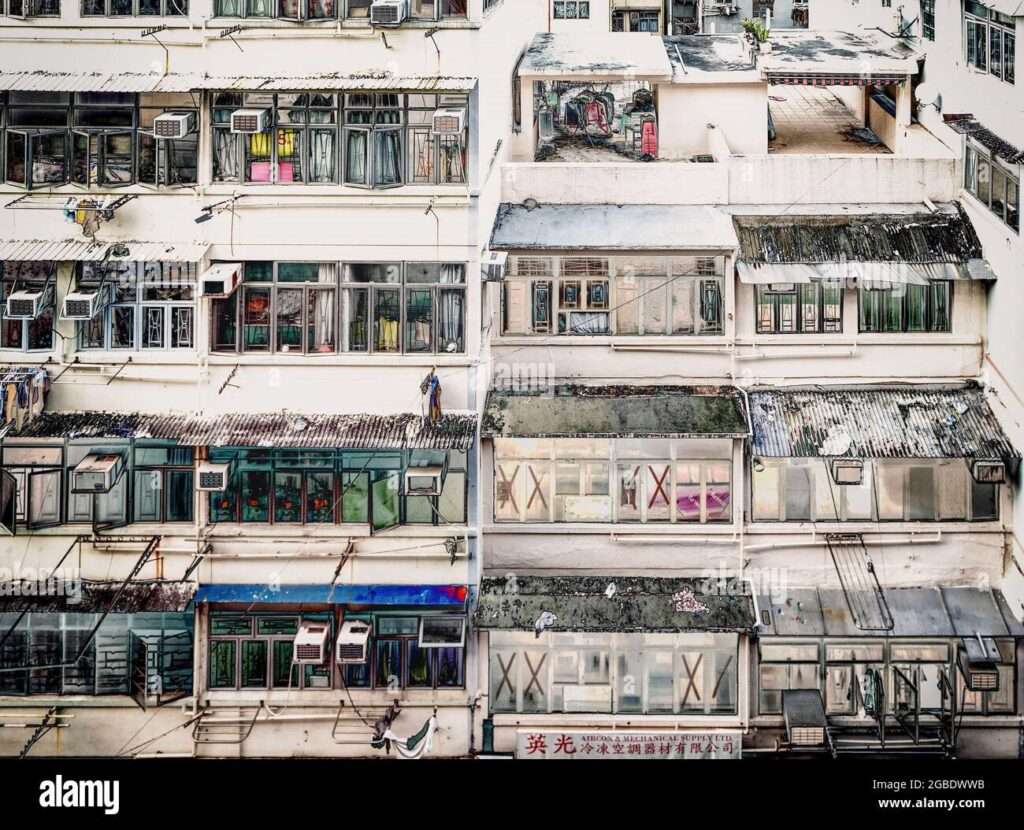
This scenario represents one of the most unjust consequences of the hongza system: an innocent property owner suffers a significant financial loss purely by geographic misfortune. The lower-floor owner cannot appeal to have their property removed from hongza databases, as listings are permanent and irremovable once entered. The owner’s only recourse is to sell at a steep discount or hold the property and hope the stigma fades over time — a process that academic research suggests takes at least four to five years before any price recovery begins.
Notable Cases in Hong Kong
Tsuen Wan Centre (1996)
In one of Hong Kong’s most notorious mass murder-suicides, a man killed his wife, three children, and two other tenants using a combination of poison and gas in a 492 sq ft flat. The unit subsequently changed hands multiple times, with each transaction recording a lower price than the last. By 2009, the flat sold for HK$350,000 — approximately 70% below the average market price of HK$1.3 million for comparable units in the same estate.
Kornhill Estate, Quarry Bay (1988)
A wife murdered her businessman husband with a hammer and dismembered his body in their flat. The unit was later purchased by a veteran hongza investor at approximately 50% below market value. The stigma spread to the entire block: units in Block D of Kornhill were listed at HK$5,700 per square foot, roughly 20% below the other blocks in the same estate. A unit directly facing the murder flat sold for 20% below market price.
Elizabeth House, Causeway Bay (1984 murder, 2020 sale)
An unsolved murder case from 1984 continued to haunt the building’s resale values more than three decades later. In 2020, a 612 sq ft flat on the same floor as the murder unit changed hands for HK$8.9 million — a 22.6% discount below the prevailing market price — solely because of its proximity to the site of the decades-old crime.
Rurik Jutting Murder, Wan Chai (2014)
The case of British banker Rurik Jutting, who murdered two women in his luxury Wan Chai apartment, caused a measurable price decline in the surrounding building. A flat a few doors down from Jutting’s former apartment sold in 2017 at a price 6% below its 2011 transaction value — a significant underperformance given that Hong Kong’s overall housing market rose more than 80% during the same period.
Double Suicide Flat, Unknown Location (2010)
A 325 sq ft unit where two separate tenants — one who burned charcoal for carbon monoxide poisoning and a policewoman who hanged herself — was purchased by investor Ng Goon-lau for just over HK$1 million in 2010, representing a 30% discount on the then-market rate. By 2018, the same unit was estimated to be worth approximately HK$4.4 million, demonstrating the potential long-term investment upside for buyers willing to accept the initial stigma.
THE BANKING BLOCKADE
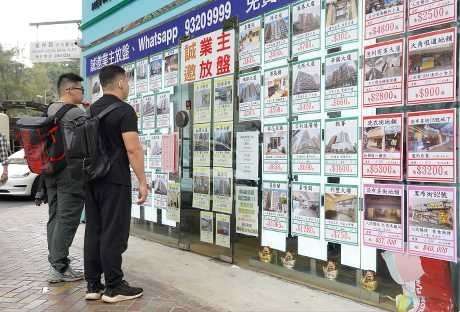
The challenge of selling a hongza is compounded by the financial sector. Banks in Hong Kong are notoriously reluctant to approve mortgages for stigmatized properties. The rationale is purely economic: if a borrower defaults on the loan, the bank will struggle to resell the foreclosed property at a price that covers the outstanding debt.
While major banks — including HSBC, Hang Seng Bank, and DBS — officially deny keeping ‘blacklists’ of haunted homes, industry insiders confirm that independent property valuers rigorously track these incidents and adjust their appraisals accordingly. When a property is appraised significantly below the asking price, or when a bank refuses to lend against it entirely, buyers are forced to pay the entire purchase price in cash. This drastically reduces the pool of potential buyers, further driving down the property’s value.
In some cases, buyers have signed provisional sale and purchase agreements and paid deposits, only to discover that no bank would finance the purchase. Unable to complete the transaction, they forfeited their deposits entirely. This scenario underscores the critical importance of securing mortgage pre-approval before any commitment is made.
The banking sector’s attitude has softened somewhat in recent years. As Hong Kong’s property prices reached extreme heights in the late 2010s, more buyers were willing to overlook the stigma in exchange for affordability. HSBC, for instance, provided a mortgage in 2017 for the purchase of the Tsuen Wan Centre unit where the 1996 mass murder-suicide occurred. However, this remains the exception rather than the rule.
LEGAL AMBIGUITY AND DISCLOSURE
Hong Kong operates under the legal doctrine of caveat emptor, or ‘let the buyer beware.’ There is no statutory law explicitly requiring a property vendor to voluntarily disclose that a flat is a hongza. The concept of a stigmatized property has no legal definition in Hong Kong law, creating significant ambiguity for both buyers and sellers.
However, a landmark 2004 court ruling involving the agency Centaline Property established a crucial precedent. The case arose from a 2001 transaction in which a buyer pulled out after discovering that the apartment he had agreed to purchase was a hongza — the vendor’s son had fallen from the balcony and died. The buyer had explicitly asked the estate agent whether there was anything ‘weird’ or ‘unusual’ (古靈精怪) about the property, and the agent had falsely replied ‘no’ without conducting any investigation.
The court ruled that estate agents are legally obligated to provide truthful answers when buyers make specific enquiries about a property’s history. Judge Benjamin Yu acknowledged that property values could be reduced ‘between 25 to 30%’ in the case of a murder or suicide, and that this information was materially relevant to the buyer’s decision. The agency was ordered to pay approximately HK$40,000 in compensation.
This ruling effectively created a duty of disclosure upon inquiry, even in the absence of a statutory requirement for voluntary disclosure. Today, all licensed estate agents in Hong Kong are bound by a code of ethics under the Estate Agents Authority that requires them to provide accurate information about any death upon inquiry. Failure to do so can result in the revocation of their licence.
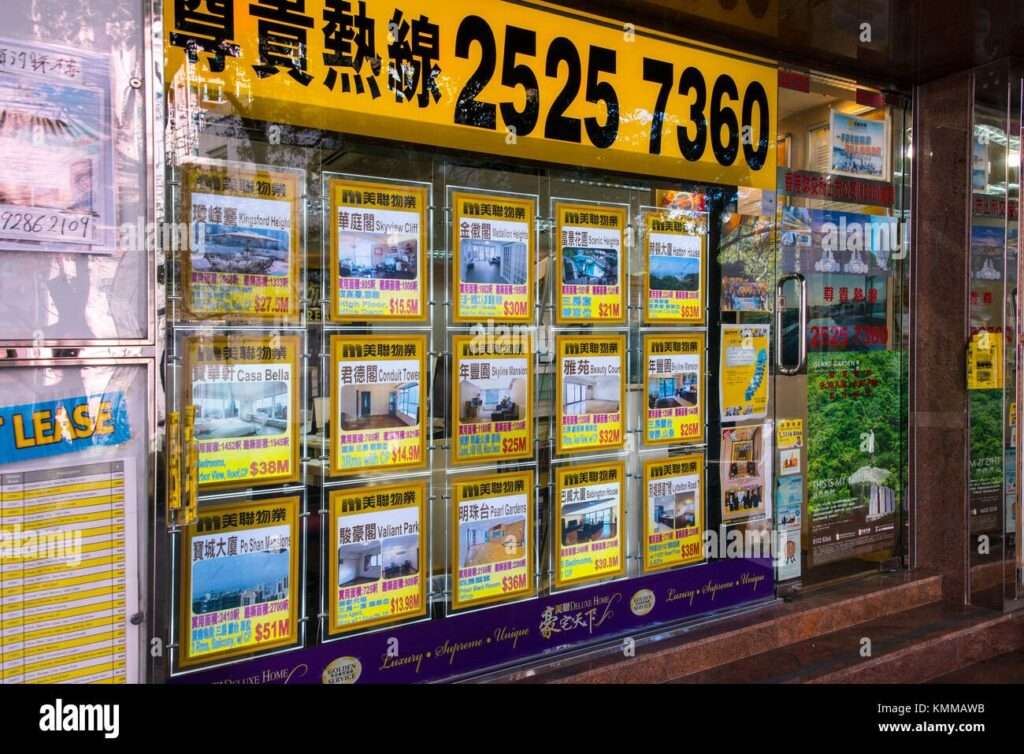
To assist buyers, a cottage industry of databases and websites has emerged, tracking unnatural deaths across the city. The most widely used, hk-compass.com, sells its data to real estate agents for a nominal annual fee. The publicly accessible squarefoot.com.hk maintains its own hongza database. Critically, once a property is listed on these databases, it cannot be removed — the stigma is permanent.
SOLUTIONS FOR THE BRAVE BUYER
Despite the stigma, the hongza market has attracted a niche group of investors, expatriates, and desperate first-time buyers who see the steep discounts as their only entry point into one of the world’s most unaffordable real estate markets. For those considering purchasing a stigmatized property, the following strategies can significantly mitigate the risks.
| Strategy | Details |
| 1. Secure Pre-Approved Financing | Never sign a provisional agreement or pay a deposit without written mortgage pre-approval from at least two banks specifically for the target unit. A refusal at this stage costs nothing; a refusal after signing costs a deposit. |
| 2. Conduct Direct, Written Inquiry | Ask the agent and vendor explicitly, in writing, whether any suicides, murders, or unnatural deaths have occurred in the unit or on the same floor. This triggers the agent’s legal duty to disclose under the 2004 Centaline ruling. |
| 3. Check Hongza Databases | Before viewing any property, search hk-compass.com and squarefoot.com.hk for the address. These databases are used by agents and contain thousands of entries. Knowing in advance gives the buyer negotiating leverage. |
| 4. Engage a Feng Shui Master | For buyers who are culturally sensitive, hiring a feng shui master to cleanse and redesign the property can restore psychological comfort and may improve the property’s appeal to future buyers from the same cultural background. |
| 5. Target the Expatriate and Mainland Market | Investors who purchase hongza properties often target expatriate tenants or mainland Chinese buyers who may not share the same superstitious aversions. Rental yields on heavily discounted properties can be exceptionally high. |
The Long-Term Investment Case
Academic research confirms that the price impact of a hongza follows a U-shaped recovery curve. Property values continue to decline for approximately four to five years after the death event, after which they gradually recover. For patient investors with sufficient capital to purchase without a mortgage, the discount can represent a compelling entry point.
The case of investor Ng Goon-lau — dubbed the ‘King of Haunted Flats’ by local media — illustrates this potential. Having purchased approximately two dozen hongza properties since the 1990s at discounts of up to 40%, Ng accumulated a portfolio that appreciated dramatically as Hong Kong’s property market surged. A 325 sq ft unit he purchased for HK$1 million in 2010 was estimated to be worth HK$4.4 million by 2018 — a 340% return over eight years.
However, this strategy requires patience, cultural awareness, and a willingness to accept that the property may remain difficult to resell for several years. It is not a strategy for those who require liquidity or who may need to exit the investment quickly.
CONCLUSION
In Hong Kong, the ghosts of the past exert a very real, very heavy toll on the present. The hongza phenomenon illustrates how deeply cultural beliefs can permeate modern financial systems, turning a tragic death into a permanent economic scar that radiates outward to innocent neighbours, entire floors, and sometimes entire buildings.
The case of the lower-floor balcony owner — whose property was contaminated by a tragedy that originated several floors above — represents the most unjust dimension of this system. Without any legal recourse, without any mechanism for removal from stigma databases, and without any compensation from the government or the estate of the deceased, such owners are left to absorb a significant financial loss through no fault of their own.
For policymakers, the hongza phenomenon raises important questions about disclosure laws, database accountability, and the rights of innocent property owners affected by the actions of others. For buyers, it offers a rare opportunity in one of the world’s most unaffordable markets — but only for those who approach it with diligence, cultural sensitivity, and a steady nerve.
REFERENCES
[1] The Economist. ‘Haunted houses have a chilling effect on the property market.’ October 31, 2019. [2] Chang, Zheng and Li, Jing. ‘The impact of in-house unnatural death on property values: Evidence from Hong Kong.’ Regional Science and Urban Economics, Vol. 73, pp. 112–126. Elsevier, 2018. [3] TalkDeath. ‘Traditional Chinese Death Rites and Superstitions Explained.’ May 8, 2025. [4] BBC Travel. ‘Why is Hong Kong so superstitious?’ December 2, 2020. [5] South China Morning Post. ‘What you need to know about the Hungry Ghost Festival.’ August 24, 2018. [6] CNN Business. ‘How secretive databases control Hong Kong’s haunted house market.’ April 21, 2013. [7] Bhattacharya, Utpal; Huang, Daisy; Nielsen, Kasper Meisner. ‘Spillovers in Prices: The Curious Case of Haunted Houses.’ Review of Finance, Vol. 25, No. 3, pp. 903–935. 2021. [8] Reuters. ‘Spooked no more? Hong Kong’s haunted apartment prices levitate with white-hot market.’ June 28, 2018. [9] Klement on Investing. ‘Haunted Houses.’ October 16, 2020. [10] South China Morning Post. ‘Scary thought: spooky new Hong Kong haunted house trend sees homebuyers take a chance on properties with a grisly past.’ December 11, 2022. [11] The Edge Malaysia / South China Morning Post. ‘Haunted flats give market the creeps.’ (Citing SCMP original reporting.) [12] South China Morning Post. ‘Hong Kong’s haunted homes sell for steep discounts during downturn, giving first-time buyers a way in.’ January 12, 2021. [13] Community Legal Information Centre (CLIC), Hong Kong. ‘Can a purchaser refuse to complete the purchase of a stigmatized property?’ [14] ONC Lawyers. ‘Legal Status of Stigmatized Property — Hong Kong.’ April 1, 2011. [15] Wikipedia. ‘Calamity House.’ (Citing Jopard Holdings Limited v. Ladefaith Limited and Centraline Property Agency Limited [2001].) [16] CNN. ‘Bold renters in Hong Kong live in haunted houses to cut a deal.’ October 30, 2025.